


From static sites to full-stack platforms
I started building websites in 2020, copying HTML snippets from W3Schools and pasting them into Notepad. I did not understand what a div was. I just knew that if I typed the right words in the right order, something appeared in the browser. That felt like enough.
It was not enough. But I did not know that yet.
The HTML/CSS phase
My first "real" project was a personal page with my name, a photo, and three links. I styled it with inline CSS because I had not learned about stylesheets. The background was a gradient I found on a blog. The text was white, centered, and far too large. I was proud of it.
That page taught me something important: the gap between knowing syntax and understanding structure is wide. I could write a paragraph tag, but I had no idea why some elements sat beside each other while others stacked vertically. Block vs. inline was a mystery I ignored for months. I just kept adding <br> tags until things lined up.
Around this time I discovered Bootstrap. It felt like cheating. Suddenly I could make columns, responsive grids, cards. I built five or six landing pages in a week, all of them using the same three-column layout. They looked professional from a distance. Up close, the code was a mess of copied classes I did not understand.
This is a pattern I have noticed in my own learning: I reach for the tool before I understand the problem. Bootstrap before CSS Grid. jQuery before vanilla JavaScript. Laravel before raw PHP. Each shortcut saved time in the short term and cost me understanding later.
JavaScript and the first real confusion
CSS was visual. I could see what changed. JavaScript was different. I spent two weeks trying to make a form validation script work and could not figure out why getElementById returned null. The script tag was in the head. The element had not loaded yet. Nobody told me about DOMContentLoaded or putting scripts at the bottom of the body. I figured it out by accident.
JavaScript was also where I first hit the wall that every self-taught developer hits: the concepts stopped being googleable. With HTML and CSS, I could search "how to center a div" and get an answer. With JavaScript, the questions became harder to phrase. "Why does my function run before the data comes back" is a callback problem, but I did not know that word yet.
I built a simple quiz app. It worked, but the code was 400 lines in a single file with no functions, just a chain of if-else statements. I showed it to a friend who was studying computer science. He told me about functions, scope, and loops. I rewrote the quiz in 80 lines. That moment, when I saw the same behavior in a quarter of the code, changed how I thought about programming.
PHP and the backend revelation
For a long time, I thought websites were just files on a server. Static files. Someone writes them, uploads them, and the browser displays them. I did not understand how Facebook could show different content to different people. The concept of server-side rendering was invisible to me.
PHP was my first backend language. I chose it because WordPress ran on it and WordPress was everywhere. My first PHP script was a contact form that sent an email. When the email actually arrived in my inbox from a form I built, I sat there staring at my phone for a full minute. That was the moment I understood what backend development meant. The server was doing something. Not just serving files, but processing input and producing output.
I spent the next few months building small PHP projects. A guestbook. A login system (with passwords stored in plain text, which I cringe about now). A blog where posts were stored in text files because I did not know about databases yet.
The database connection
MySQL changed everything again. Storing data in a database instead of flat files felt like moving from a notebook to a filing cabinet. I could search, sort, filter. I built a student management system for a university project. It had CRUD operations, pagination, and a search bar. It was ugly, the SQL was vulnerable to injection, and the code mixed HTML with PHP queries. But it worked, and I learned more from that project than from any tutorial.
The biggest lesson from that phase was about security. I left an SQL injection vulnerability open and a classmate (half-jokingly) dropped my test database. I learned prepared statements that same afternoon. Some lessons arrive faster when they come with consequences.
Laravel and the framework shift
Raw PHP works, but it does not scale well in terms of code organization. My projects were becoming larger, and I was spending more time fighting my own file structure than building features. A developer I followed on YouTube recommended Laravel. I installed it, opened the project folder, and saw dozens of directories I did not understand. Models, controllers, migrations, middleware, providers. I almost closed the laptop.
I stuck with it because the routing system made immediate sense. Instead of creating a new PHP file for every page, I could define routes in one place. That single concept, separating URLs from files, was worth the confusion of everything else.
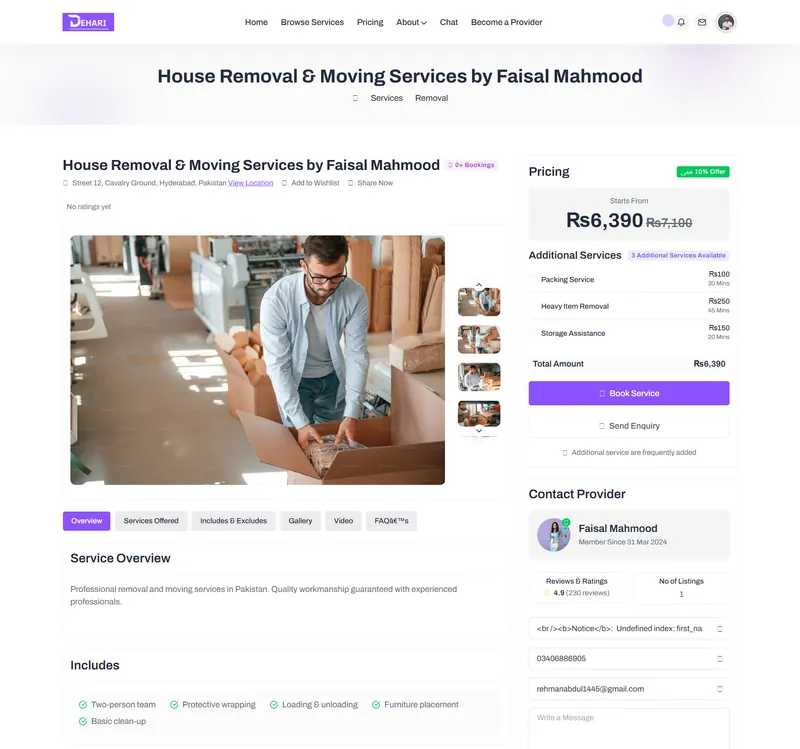
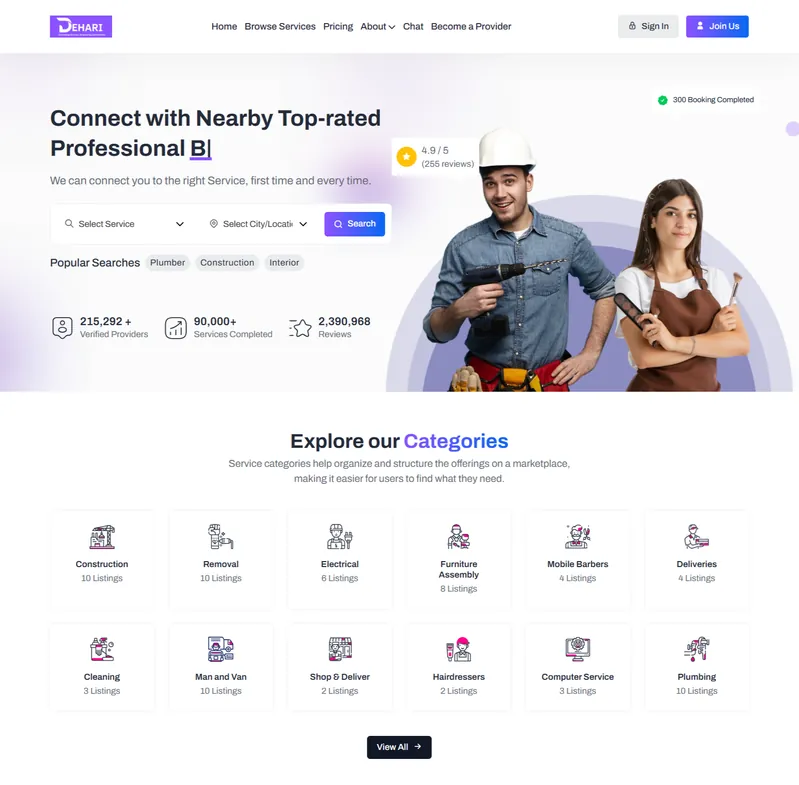
It took me about three weeks to feel comfortable with Laravel's basics. MVC architecture clicked once I built a project with it instead of reading about it. The Dehari home services platform was one of my first real Laravel projects. It had user authentication, role-based access, service listings, and a booking system. Writing that application taught me about database relationships, form requests, validation, and Eloquent ORM. Each of those topics had been abstract until I needed them for a specific feature.
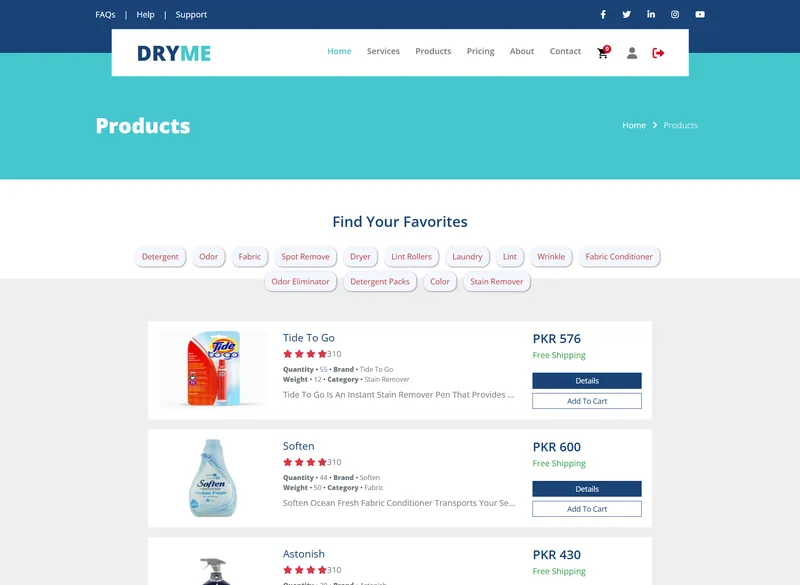
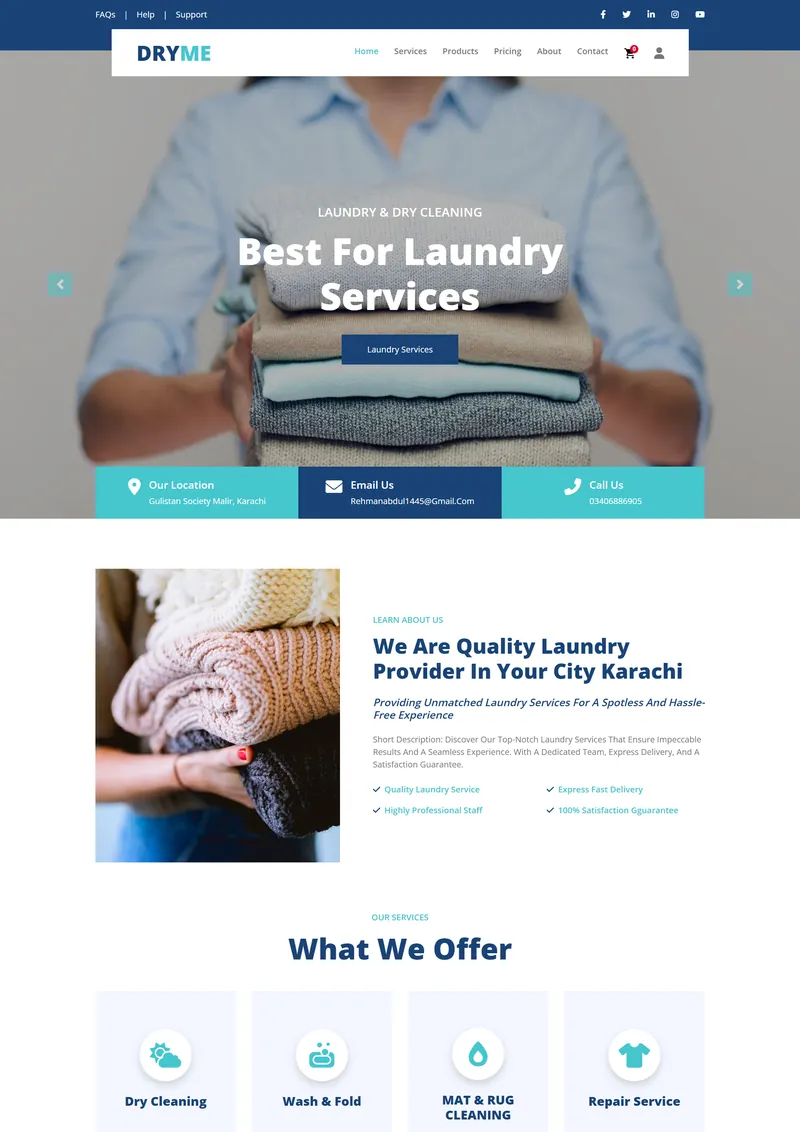
The DryMe laundry management system pushed me further. It needed order tracking, status updates, customer notifications. I learned about queues, events, and how to structure an application that multiple users interact with simultaneously. The problems I was solving were no longer about making something appear on screen. They were about data flow, state management, and user workflows.
Python and broadening the toolkit
I picked up Python not because I planned to, but because a client project required data processing that PHP handled poorly. Parsing large CSV files, cleaning data, generating reports. Python's ecosystem for that kind of work is far ahead of PHP's.
Learning a second backend language was faster than learning the first. The concepts transfer: variables, loops, functions, data structures. The syntax is different, but the thinking is the same. What surprised me was how much Python changed my PHP code. Python's emphasis on readability and simplicity made me write cleaner PHP when I went back to it.
What actually helped me grow
Tutorials got me started. They did not make me a developer. Here is what actually moved the needle:
- Building things I did not know how to build. Every project that scared me a little taught me the most. If I already knew how to do it, I was not learning.
- Reading other people's code. Open source repositories taught me patterns, naming conventions, and project structure that no tutorial covered. I spent hours reading Laravel's source code, and it changed how I organized my own work.
- Breaking things on purpose. Commenting out lines to see what happens. Passing wrong data types. Triggering error messages intentionally. Understanding failure teaches you more than following a happy path.
- Client work with deadlines. Nothing forces you to solve a problem like someone paying you to solve it by Friday. Academic exercises let you quit when it gets hard. Client work does not.
The mistakes were equally instructive. I spent too long watching tutorials without building. I avoided version control until I lost a week of work. I skipped testing because my projects were "too small" (they were not). I wrote code that worked but that I could not read a month later.
Where I am now
My web developer journey is still ongoing. I am comfortable with HTML, CSS, JavaScript, PHP, Laravel, Python, MySQL, and PostgreSQL. I design in Figma and build in code. I understand APIs, authentication, deployment, and server management. None of that knowledge arrived in a straight line.
The path from static sites to full-stack development is not a ladder. It is more like a web, where each new skill connects to three others you did not expect. Learning databases made me rethink how I structured frontend forms. Learning Python made me write better PHP. Learning about UI/UX design made me question every feature I built from a developer-first perspective.
If you are early in your full-stack development career, the one thing I would tell you is this: build something every week. It does not have to be good. It does not have to be original. But it has to be yours, and it has to be slightly beyond what you already know. That gap, between what you can do and what you are trying to do, is where the actual learning happens.